Jan 25, 2026
Early-Stage vs Growth-Stage Startups: What Job Seekers in NYC Need to Know
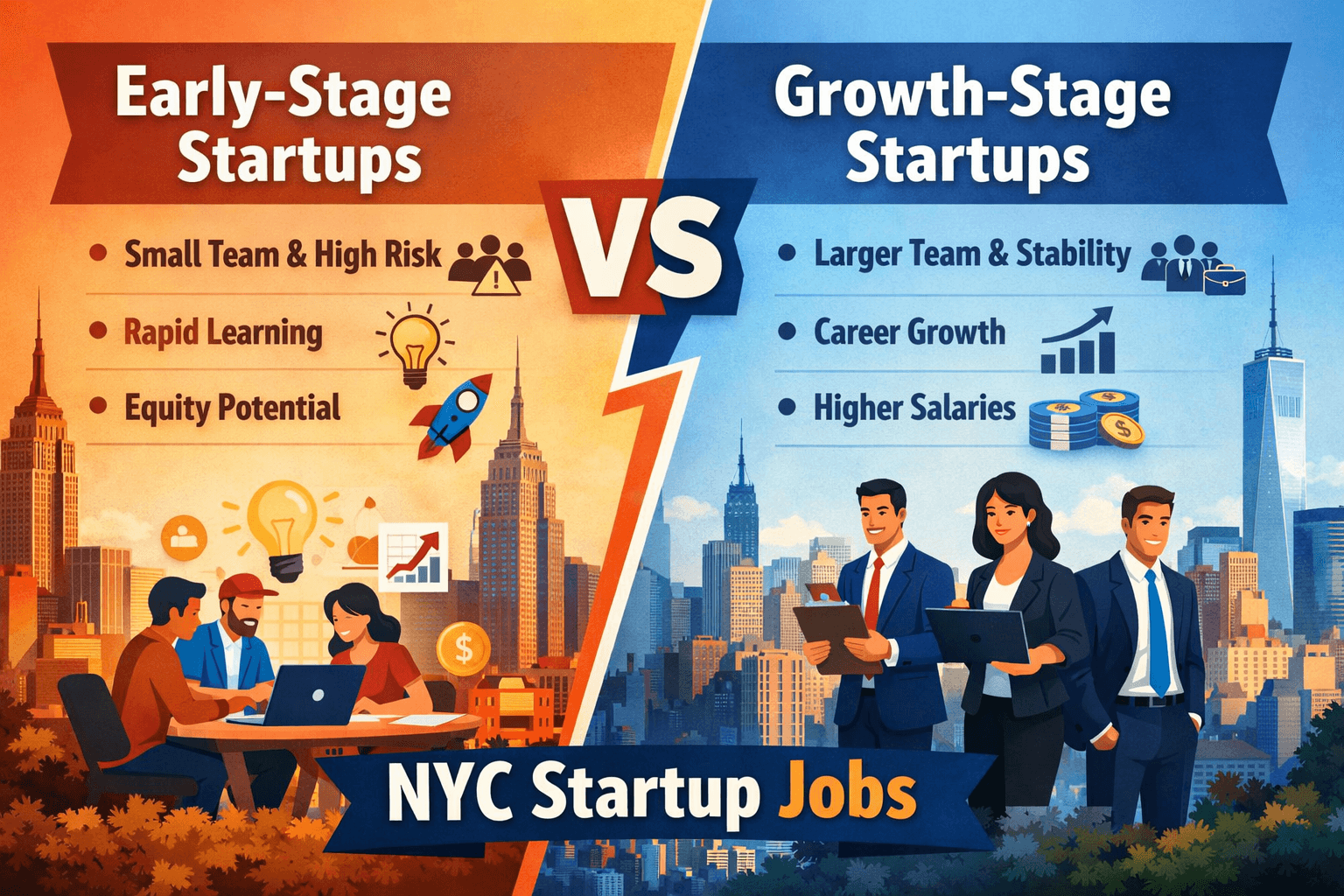
Choosing where to work in the startup ecosystem can be overwhelming—especially in NYC, one of the world’s hottest startup hubs. A critical factor that often gets overlooked is the stage of the startup. Whether it’s early-stage startups or growth-stage startups, understanding the differences can help job seekers find the right career path, culture fit, and growth opportunities.
In this article, we’ll break down the key differences between early-stage and growth-stage startups, explore the pros and cons of working at each, and provide actionable insights on finding the best startup jobs in NYC.
What Is an Early-Stage Startup?
An early-stage startup is typically in the idea, seed, or Series A funding stage. These startups are building their product, testing their market fit, and figuring out their growth strategy.
Key Characteristics:
Small team size (usually under 20–50 employees)
High risk and high reward: Product may pivot frequently, and job stability can be uncertain
Hands-on roles: Employees often wear multiple hats, from marketing to product management
Rapid learning: Opportunities to gain diverse skills quickly
Why Work at an Early-Stage Startup?
Gain exposure to every aspect of building a company
Opportunity to influence product and strategy directly
Potential for equity growth if the startup succeeds
Challenges:
Less structured work environment
Long hours and high pressure
Limited resources compared to larger startups
What Is a Growth-Stage Startup?
A growth-stage startup has typically passed the early hurdles of product-market fit and seed funding. They may be in Series B, C, or later rounds, scaling operations, expanding teams, and entering new markets.
Key Characteristics:
Larger team size (50–500+ employees)
More stability: Business model validated, revenue streams established
Specialized roles: Employees focus on specific functions instead of wearing multiple hats
Structured processes: More defined workflows, reporting, and company policies
Why Work at a Growth-Stage Startup?
Better work-life balance compared to early-stage startups
Career growth opportunities in management and specialized functions
Competitive salaries and benefits
Access to mentorship from experienced founders and executives
Challenges:
Less autonomy compared to early-stage startups
Work can feel more like a “corporate startup”
Growth pressure may create intense deadlines
Early-Stage vs Growth-Stage Startups: Side-by-Side Comparison
Factor | Early-Stage Startup | Growth-Stage Startup |
|---|---|---|
Team Size | <50 | 50–500+ |
Funding | Seed or Series A | Series B/C and beyond |
Risk | High | Moderate |
Role Flexibility | Very high | Moderate |
Salary & Benefits | Lower | Higher |
Learning Opportunities | Broad & hands-on | Specialized & deep |
Work-Life Balance | Often challenging | More structured |
Career Growth | Depends on startup success | More predictable |
NYC Startup Ecosystem Insights
New York City is home to thousands of startups across fintech, healthtech, SaaS, AI, and consumer tech. The city has a rich mix of early-stage startups looking for ambitious talent ready to make an impact, and growth-stage startups offering stability and career advancement.
Examples of Opportunities on StartupJobs.nyc:
Early-stage: Roles in product, engineering, marketing, and operations where employees contribute across multiple functions
Growth-stage: Specialized roles in product management, growth marketing, data analytics, and engineering leadership
Focusing your search on NYC-specific opportunities ensures you’re discovering startups that match your career goals and preferred work environment.
Tips for Choosing the Right Startup Stage
Assess your risk tolerance: Are you comfortable with uncertainty and long hours? Early-stage might suit you.
Consider career goals: Want broad experience quickly or specialized growth? Choose accordingly.
Evaluate equity vs salary: Early-stage startups often offer higher equity potential; growth-stage startups offer better pay stability.
Research startup culture: Culture can differ widely even within the same stage.
Check NYC startup resources: Use startupjobs.nyc to filter jobs by stage, role, and industry.
Finding the Best Startup Jobs in NYC
StartupJobs.nyc is the premier platform to explore both early-stage and growth-stage startup jobs in NYC. Features include:
Search by startup stage, role, or location
Detailed listings with job descriptions, salary, and company info
Opportunities in engineering, product, marketing, operations, and design
Action Step: Start by filtering roles based on your preferred startup stage. Review company size, funding, and culture before applying.
Conclusion
Whether you’re drawn to the fast-paced, high-risk environment of early-stage startups or the structured growth opportunities of growth-stage startups, NYC offers a wealth of options. Understanding the differences between startup stages, evaluating your career goals, and using resources like startupjobs.nyc will help you land the ideal role.
Your next career move could shape your future—choose wisely, and thrive in the startup ecosystem that suits you best.